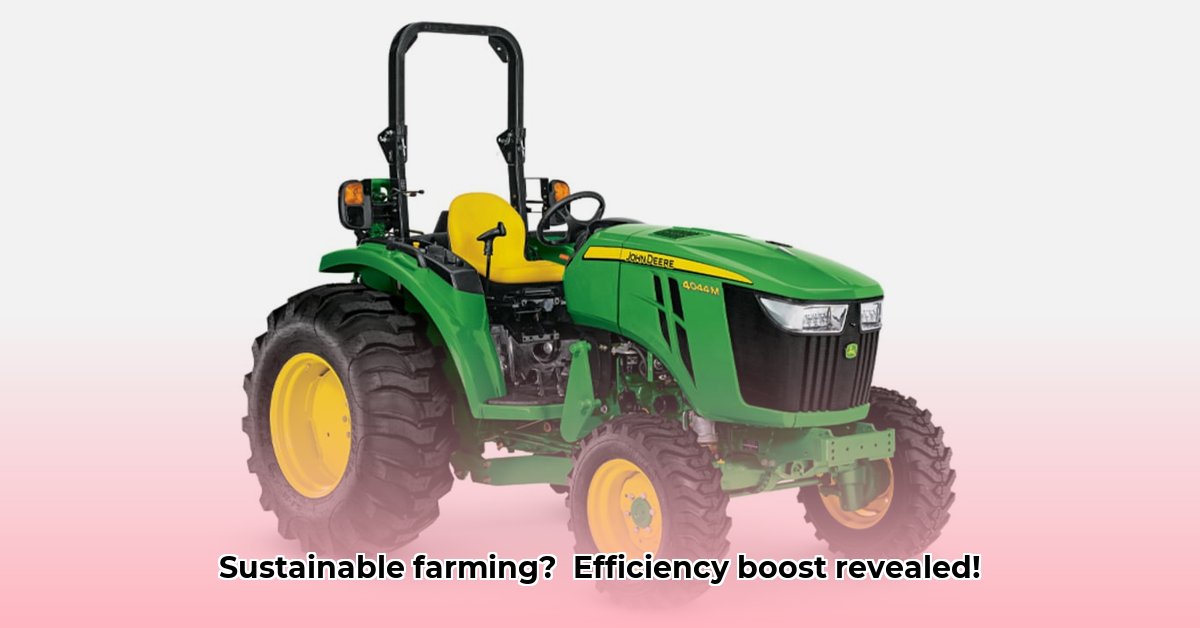
Sustainable farming practices are crucial for the future of agriculture. Series tractors, with their diverse range of models, offer farmers of all sizes the opportunity to significantly improve efficiency and reduce their environmental footprint. Choosing the right tractor, however, requires careful consideration. This guide will walk you through the process, providing actionable steps to select the most suitable and environmentally friendly machine for your needs. For more information on Kubota tractors, check out this helpful resource.
Understanding Series Tractors and Their Benefits
Series tractors represent a family of machines designed to meet diverse farming requirements. From compact tractors ideal for smaller operations to powerful row-crop tractors suited for large-scale farming, the variety ensures a perfect fit for any farm size. Modern series tractors go beyond mere horsepower; they integrate advanced technologies to enhance sustainability.
Decoding the Technology
Today's tractors are equipped with features designed to boost efficiency and minimize environmental impact. Key technological advancements include:
Fuel Efficiency: Modern engines are engineered for exceptional fuel economy, reducing both operational costs and greenhouse gas emissions. Look for features like smart engine management systems which optimize fuel consumption based on real-time operation.
Precision Technology: GPS guidance, automated steering, and variable rate application technologies enable precise application of fertilizers and pesticides. These minimize waste and maximize yields, reducing the ecological burden. This precision farming approach can lead to substantial cost savings and environmental gains.
Soil Health Focus: Many modern tractors are designed to minimize soil compaction. Maintaining soil health is paramount for long-term sustainable farming and high crop yields. This prevents soil degradation and enhances overall farm productivity.
Choosing the Right Tractor: A Step-by-Step Guide
Selecting the perfect series tractor is a significant investment. This decision hinges on several key factors:
Assess Farm Size and Operations: If you have a small farm or specialized crops, a compact or utility tractor may suffice. Larger operations will require more powerful machines like row-crop or four-wheel-drive (4WD) tractors.
Analyze Crop Types and Terrain: The type of crops grown and the farm’s terrain dictate necessary tractor features. Row crop tractors excel in row crops, while specialty tractors are more suitable for vineyards, orchards, or other unique settings. Challenging terrain might necessitate a 4WD tractor.
Determine Budget and Financing Options: Tractor prices vary considerably. Thoroughly research, compare models, and explore financing options to make an informed financial decision. This includes leasing or purchasing. Ensure affordability without compromising farm financial stability.
Evaluate Technological Requirements: Advanced tractor features require training. Determine your technological comfort level and the necessary training resources available before purchase. Investment in training is crucial for maximizing return on investment.
Actionable Steps for Sustainable Farming with Tractors
Implementing these steps can improve your farm's efficiency and environmental performance:
Conduct Thorough Research: Explore various tractor models, read independent reviews, compare specifications, and compile a list of the pros and cons of each model.
Define Specific Needs: Before shopping, identify your power requirements and essential features. List must-have and desired functionalities for clear decision-making.
Explore Financing Options: Consult lenders to understand available financing plans and choose the most suitable option for your farm's financial situation.
Seek Expert Advice: Discuss your needs with agricultural experts or trusted dealers. Their guidance can prevent costly mistakes and optimize your selection.
Invest in Operator Training: Thorough training on your chosen tractor's technology ensures effective use, maximizing both efficiency and sustainability.
Long-Term Strategies for Sustainable Farming
Sustainably managing a farm is an ongoing commitment. Consider these long-term strategies:
Explore Alternative Fuels: Biodiesel and other renewable fuels have the potential to significantly reduce your farm’s carbon footprint. Research and explore the viability of such alternatives.
Utilize Data Analytics: Leverage the data collected by modern tractors to optimize farming practices, maximizing efficiency and minimizing resource use. This data-driven approach can enhance farm management.
Prioritize Soil Health: Implement practices that minimize soil compaction and improve soil health for optimal long-term farm productivity. Healthy soil is the foundation for sustainable farming.
Comparing Tractor Types: A Quick Overview
| Tractor Type | Ideal Farm Size | Advantages | Disadvantages |
|---|---|---|---|
| Compact | Small, specialized | Maneuverable, fuel-efficient, budget-friendly | Limited power, fewer advanced features |
| Utility | Medium-sized | Versatile, balanced power & cost | Might lack some high-tech features |
| Row Crop | Large-scale | High horsepower, suitable for large fields | Higher price tag, potential for soil compaction |
| 4WD | Large-scale, challenging terrain | Excellent traction, ideal for difficult conditions | High initial cost, higher fuel consumption |
Remember, the ideal series tractor is the one that perfectly aligns with your specific farm needs and long-term sustainability goals. Making a well-informed decision today will yield long-term benefits for both your farm’s profitability and the environment.